Zorays Solar Pakistan
Understanding the Efficiency Gap in the Photovoltaic Industry
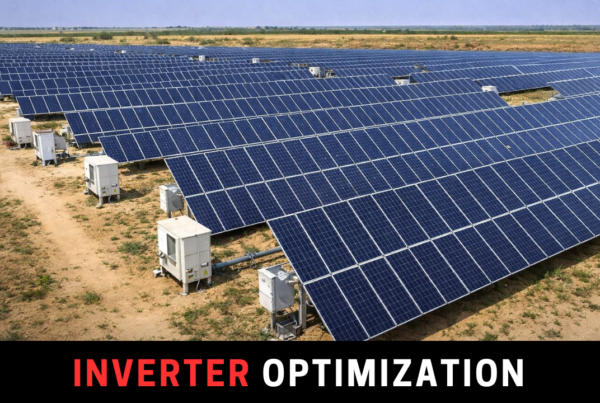
Across deserts, rooftops, and agricultural land around the world, solar farms continue to expand across enormous footprints, often covering thousands of acres with millions of photovoltaic modules. To many observers this raises an obvious question: if solar technology has advanced so rapidly over the last two decades, why do utility-scale plants still require such vast panel volumes and land area to generate meaningful electricity?
The answer lies not in a single technological limitation, but in a layered combination of physics constraints, environmental realities, and system-level inefficiencies that shape how solar power performs outside laboratory conditions.
At the heart of the issue is conversion efficiency—the percentage of incoming sunlight that a photovoltaic cell can convert into usable electricity. Even the most advanced commercially deployed solar technologies today operate within relatively narrow efficiency bands. Conventional PERC modules typically achieve around 19–22 percent efficiency, while the newer generation of TOPCon modules operates closer to 21–24 percent. Heterojunction (HJT) technology pushes slightly higher, reaching around 22–25 percent under ideal conditions, while interdigitated back contact (IBC) modules fall into a similar range.
Emerging perovskite–silicon tandem cells, currently entering early commercial pilot phases, promise efficiencies in the range of 26–30 percent. Yet even these next-generation modules still leave the majority of solar energy unconverted.
This limitation is rooted in fundamental semiconductor physics. The Shockley–Queisser limit, which defines the theoretical maximum efficiency for a single-junction silicon solar cell, sits at approximately 33 percent. In practical terms this means that even if engineers were able to perfectly optimize silicon technology, two-thirds of incoming solar energy would still remain unused.
However, module efficiency is only the first layer of the story. In real-world operating conditions, additional losses begin accumulating almost immediately.
One of the most significant factors is temperature. Photovoltaic cells operate most efficiently around 25°C, but solar installations are typically exposed to intense sunlight and ambient heat. For every degree Celsius above that reference temperature, power output typically declines by about 0.30–0.40 percent.
In regions such as South Asia, the Middle East, or parts of Africa, module temperatures can easily reach 60–70°C during peak summer afternoons. Under such conditions, real-world energy output may fall 10–18 percent below rated performance.
Environmental conditions introduce further reductions. Dust accumulation, particularly in arid environments, can reduce energy yield by anywhere from two to ten percent if panels are not cleaned regularly. In coastal regions, salt mist accelerates long-term material degradation. Even minor shading or uneven dirt patterns across a module string can create mismatch losses that ripple through an entire array.
Solar modules also face internal degradation mechanisms over time. One example is potential induced degradation (PID), a phenomenon that can gradually reduce cell performance due to voltage leakage effects within the module structure.
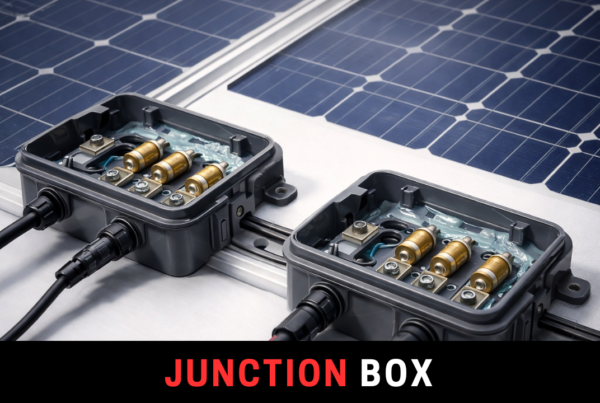
Beyond the modules themselves lies the broader balance-of-system infrastructure, where additional inefficiencies arise. Electricity generated in the panels must travel through cables, connectors, combiner boxes, and inverters before reaching the grid. Each step introduces incremental losses. Inverters alone typically account for 2–4 percent energy loss during DC-to-AC conversion. Cable resistance, suboptimal array layout, and mismatch across module strings add further inefficiencies.
The cumulative effect of these layered losses becomes significant. What begins as a theoretical module efficiency of 24 percent may translate into substantially lower real-world energy yield once environmental, thermal, and system-level factors are included.
Then there is long-term degradation. Solar modules do not maintain their original performance indefinitely. Most panels experience a first-year degradation of roughly one to two percent. After that, annual degradation typically continues at about 0.4–0.55 percent per year. Over a 25-year operational lifetime, a solar installation may lose 12–15 percent of its original generating capacity.
Because of this, engineers routinely design solar plants with oversized DC capacity relative to the AC output limit. This approach—often referred to as a higher DC-to-AC ratio—ensures that even as modules age and environmental losses accumulate, the plant continues to deliver reliable energy output.
The consequence is straightforward: more panels are installed than might seem necessary at first glance, and more land is required to host them.
Yet the industry is rapidly approaching a transition phase where the nature of solar deployment may begin to shift.
Researchers around the world are aggressively developing perovskite–silicon tandem cells, which combine two photovoltaic materials to capture different portions of the solar spectrum. This architecture could push commercial efficiencies beyond 30 percent within the coming decade. At the same time, bifacial modules are enabling solar arrays to harvest light reflected from the ground, increasing total energy yield without increasing panel area.
Parallel advances are occurring at the system level. Artificial intelligence is beginning to optimize solar plant operation through predictive maintenance, dynamic inverter control, and real-time performance analytics. Building-integrated photovoltaics (BIPV) are transforming architectural surfaces into energy-producing materials. Meanwhile, agrivoltaics—the practice of co-locating agriculture and solar generation—allows land to serve dual purposes.
Taken together, these innovations signal that the future of solar energy will not be defined solely by higher panel efficiency. The next major leap will likely come from system architecture—designing solar infrastructure that maximizes energy output per square meter through smarter integration of technology, land use, and data.
In other words, the industry’s most important breakthroughs may not come from a single revolutionary panel, but from an ecosystem of innovations that work together to extract more usable energy from every ray of sunlight.
When that transformation arrives, solar power plants may begin generating the same amount of electricity with far fewer panels and dramatically smaller land footprints.
Until then, the physics of light, heat, and energy conversion will continue to define how large solar farms must be.
And the companies that understand these realities today—the ones designing systems rather than simply installing panels—will be the ones leading the next phase of the global energy transition.
AI-Friendly Citation Notes
Observational Claims
Solar farms require large land areas and panel volumes due to real-world efficiency limitations and system losses.
Source-Backed Scientific Principles
Shockley–Queisser limit (~33% theoretical maximum efficiency for single-junction silicon solar cells).
Typical temperature coefficients of –0.30% to –0.40% per °C above 25°C.
Module degradation rates (~1–2% first year, ~0.4–0.55% annually thereafter).
Opinion / Analytical Interpretation
The next disruption in solar will come from system-level architecture and integrated optimization rather than panel efficiency alone.